
Gana Dosha in Vedic Astrology: Meaning, Effects, and Remedies
By Vaidik Vidhan Charitable Trust
Introduction
Gana Dosha is one of the important factors considered in Vedic astrology during Kundli matching for marriage. It is evaluated under the Ashtakoota Milan system, where eight different aspects of compatibility are analyzed before marriage. Gana Koota carries a maximum of 6 points out of the total 36 points and represents the mental temperament, behavioral tendencies, and psychological compatibility between prospective partners.
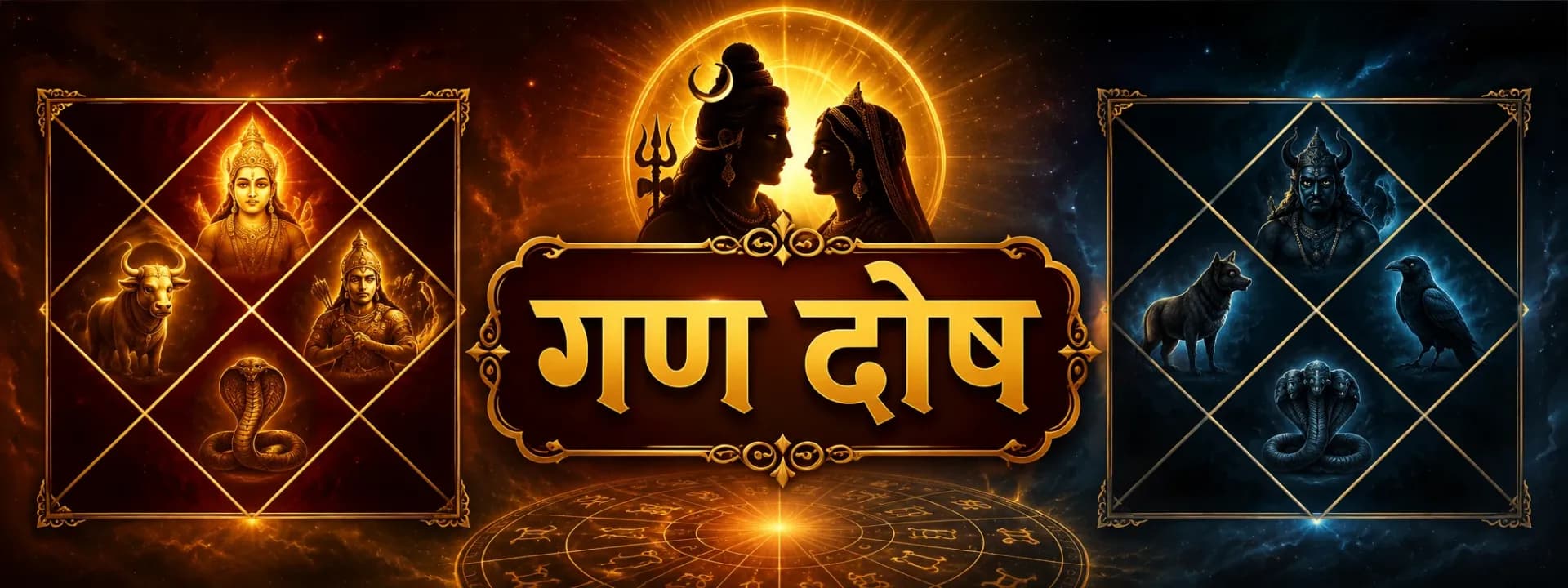
The word "Gana" refers to the fundamental nature or personality category of an individual. Every Nakshatra (birth star) belongs to one of three Ganas:
- Deva Gana (Divine Nature)
- Manushya Gana (Human Nature)
- Rakshasa Gana (Powerful or Intense Nature)
When the Ganas of two individuals are incompatible, it may result in what astrologers call Gana Dosha. This dosha is believed to indicate differences in thinking patterns, emotional responses, communication styles, and lifestyle preferences.
What is Gana Dosha?
Gana Dosha occurs when the bride and groom belong to Ganas that are considered less compatible according to traditional Kundli matching principles.
The primary purpose of Gana matching is to assess whether two individuals can understand each other's emotional and psychological needs. Marriage is not merely a physical or social union; it is also a union of minds and temperaments. Therefore, Gana matching receives significant importance in traditional astrology.
A mismatch in Gana may indicate:
- Frequent misunderstandings
- Emotional incompatibility
- Communication issues
- Conflicts in decision-making
- Differences in values and priorities
- Lack of harmony in married life
However, Gana Dosha alone does not determine the success or failure of a marriage. Other factors such as Bhakoot, Nadi, Graha Maitri, planetary placements, and overall horoscope strength must also be considered.
The Three Types of Ganas
- Deva Gana
Deva Gana represents divine and spiritual qualities.
Characteristics
People belonging to Deva Gana are generally:
- Gentle
- Compassionate
- Kind-hearted
- Spiritual
- Peace-loving
- Forgiving
- Respectful
They prefer harmony over conflict and often seek balance in relationships. They possess a natural inclination toward helping others and maintaining ethical values.
Deva Gana Nakshatras
- Ashwini
- Mrigashira
- Punarvasu
- Pushya
- Hasta
- Anuradha
- Revati
- Manushya Gana
Manushya Gana symbolizes human qualities and balanced behavior.
Characteristics
Individuals under this category are:
- Practical
- Ambitious
- Adaptable
- Realistic
- Social
- Goal-oriented
- Balanced between emotions and logic
They understand both material and spiritual aspects of life and often excel in leadership roles.
Manushya Gana Nakshatras
- Bharani
- Rohini
- Ardra
- Purva Phalguni
- Uttara Phalguni
- Purva Ashadha
- Uttara Ashadha
- Purva Bhadrapada
- Uttara Bhadrapada
- Rakshasa Gana
Rakshasa Gana represents strength, intensity, determination, and independence.
Characteristics
People belonging to Rakshasa Gana are:
- Fearless
- Powerful
- Independent
- Strong-willed
- Competitive
- Courageous
- Passionate
The term "Rakshasa" should not be misunderstood as evil. It signifies a bold, dominant, and intense personality. These individuals often challenge conventions and possess remarkable determination.
Rakshasa Gana Nakshatras
- Krittika
- Ashlesha
- Magha
- Chitra
- Vishakha
- Jyeshtha
- Mula
- Dhanishtha
- Shatabhisha
Gana Compatibility in Marriage
The compatibility score is calculated based on the Ganas of both individuals.
| Groom/Bride | Deva | Manushya | Rakshasa |
|---|---|---|---|
| Deva | Excellent | Good | Poor |
| Manushya | Good | Excellent | Average |
| Rakshasa | Poor | Average | Good |
Traditional Gana Koota scoring assigns:
- Same Gana = 6 points
- Deva-Manushya = 5 points
- Manushya-Rakshasa = 1 point
- Deva-Rakshasa = 0 points
Effects of Gana Dosha
- Emotional Differences
Partners may struggle to understand each other's feelings and emotional expectations.
- Communication Problems
Differences in communication styles can lead to misunderstandings and arguments.
- Ego Clashes
Particularly when one partner belongs to Rakshasa Gana and the other to Deva Gana, conflicts may arise due to contrasting personalities.
- Lifestyle Conflicts
Different preferences regarding family, career, spirituality, and social interactions may create tension.
- Reduced Harmony
Mental and emotional harmony may require greater effort and maturity.
Is Gana Dosha Always Harmful?
No.
Many astrologers emphasize that Gana Dosha should never be judged in isolation.
Several factors can reduce or completely neutralize its effects:
Strong Planetary Compatibility
If the Moon signs, ascendants, and planetary relationships are favorable, the negative impact of Gana Dosha can be minimized.
High Overall Guna Milan Score
If the total score exceeds 24 out of 36, marriage is often considered acceptable despite Gana Dosha.
Benefic Jupiter and Venus
Strong placements of Jupiter and Venus can enhance marital harmony and understanding.
Mutual Understanding
Modern relationships thrive on communication, respect, and emotional intelligence. These factors often outweigh minor astrological mismatches.
Signs That Gana Dosha May Be Significant
Astrologers generally pay closer attention when:
- Deva Gana and Rakshasa Gana receive zero points.
- Multiple other doshas are present simultaneously.
- Seventh house afflictions exist.
- Venus or Jupiter is weak.
- Moon suffers from malefic influences.
In such cases, detailed horoscope analysis becomes essential.
Traditional Remedies for Gana Dosha
- Gana Dosha Shanti Puja
A special ritual performed to reduce the adverse effects of Gana mismatch.
- Navagraha Shanti
Strengthening favorable planetary influences helps improve relationship harmony.
- Mahamrityunjaya Jaap
This powerful Vedic mantra is often recommended for removing obstacles and promoting peace.
- Rudrabhishek
Worship of Lord Shiva helps balance conflicting energies within relationships.
- Vishnu-Lakshmi Worship
Regular prayers to Lord Vishnu and Goddess Lakshmi are believed to strengthen marital happiness.
- Charity and Seva
Donations and service activities performed with sincerity are considered effective remedies in Vedic traditions.
Modern Perspective on Gana Dosha
While traditional astrology views Gana Dosha as an important compatibility factor, modern astrologers often treat it as one component among many.
Successful marriages depend upon:
- Trust
- Communication
- Respect
- Shared goals
- Emotional maturity
- Commitment
Many couples with Gana Dosha enjoy happy and fulfilling relationships because other astrological combinations and personal qualities compensate for the mismatch.
Conclusion
Gana Dosha is an important aspect of Vedic horoscope matching that evaluates the psychological and behavioral compatibility of prospective partners. Based on the classification of Nakshatras into Deva, Manushya, and Rakshasa Ganas, it helps astrologers understand how two individuals may interact emotionally and mentally within a marriage.
However, Gana Dosha should never be considered the sole deciding factor for marriage. A comprehensive horoscope analysis, along with mutual understanding, respect, and compatibility in real life, provides a more accurate assessment of marital success. With proper guidance, remedies, and awareness, even couples with Gana Dosha can build a harmonious and prosperous married life.
For detailed Gana Dosha analysis, Kundli matching, and Vedic remedies, consult the experienced astrologers of Vaidik Vidhan Charitable Trust.